
An uninhabitable property in the fiscal sense is a property that cannot be occupied due to structural damage or a disaster making any habitation impossible. This qualification entitles the owner to a reduction in property tax, but the administration requires precise evidence and strict formalities, which have been reinforced since recent regulatory changes.
Mandatory Prefectural Order from 2025: What Changes for Proof of Uninhabitability
Until recently, a simple report made by a real estate diagnostician was sufficient in many cases to document the condition of a property. The regulatory change of 2025 has altered this situation by imposing a mandatory prefectural order to qualify a property as uninhabitable in cases of prolonged vacancy.
This measure aims to harmonize the criteria across the entire territory. Before this change, departmental commissions applied variable evaluation grids, creating disparities among property owners depending on their department. The prefectural order formalizes the decision of a public authority and is now the centerpiece of any file submitted to the tax authorities.
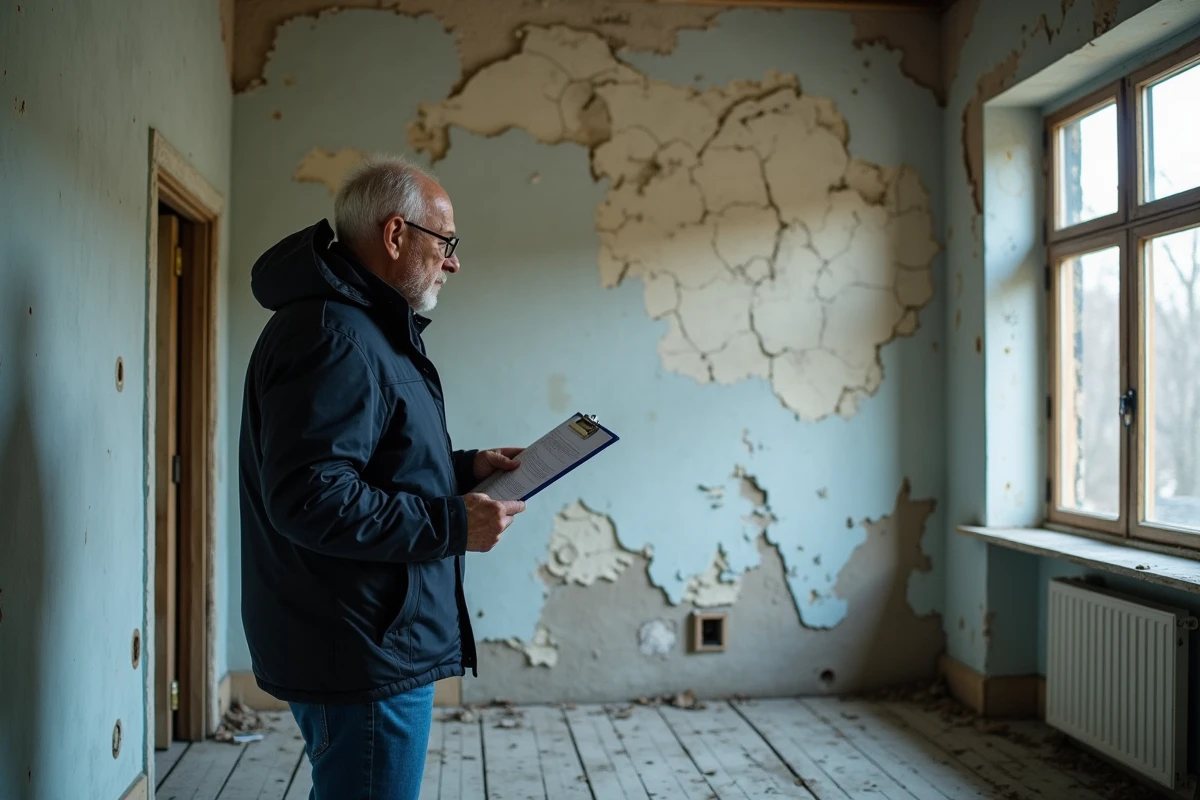
To obtain this order, the request goes through the town hall or prefecture, which mandates an inspection of the property. The inspection report evaluates the structure of the building, the networks (water, electricity, sanitation), and sanitary conditions. A property owner wishing to understand the steps in case of an uninhabitable house must include this administrative step as a starting point, even before gathering other supporting documents.
Building a Solid Tax File: Documents That Stand Up to Scrutiny
Since early 2026, tax services have significantly increased requests for additional supporting documents regarding declarations of uninhabitability. Inspections are multiplying to limit fraud related to property tax exemptions. An incomplete or poorly documented file almost systematically leads to rejection.
Priority Documents to Gather
- The prefectural order declaring uninhabitability, which serves as the legal basis for the request for a tax reduction from the tax administration
- A technical expertise report (structural engineer, accredited control office) describing the observed disorders: structural cracks, roof collapse, absence of a functional electrical network
- Energy and water consumption records showing a total absence of use of the property during the relevant period
- Timestamped and geolocated photographs of the property’s condition, ideally timestamped by a bailiff
- If applicable, a certificate from the Regional Health Agency (ARS), noting that since mid-2025, ARS certificates without a contradictory visit are systematically refused
Cross-Expertise with Urban Planning Services
The refusal of ARS certificates conducted without a contradictory visit has led many property owners to seek cross-expertise with municipal urban planning services. This double validation significantly enhances the credibility of the file.
Urban planning services can attest that the property does not meet the minimum habitability standards defined by the departmental sanitary regulations. Their technical opinion, combined with the prefectural order, forms a body of evidence that is difficult for the tax administration to contest.
3D Scans and Digital Evidence: Emerging Tools Not Yet Recognized by Tax Authorities
Several certified applications now offer 3D scans of properties that can be performed using a smartphone or tablet. These tools allow for modeling the interior of a property, measuring structural deformations, and visually documenting damages without requiring the presence of an expert.
On the ground, some property owners are already using these digital records to complement their files. The LiDAR technology integrated into certain devices produces precise, timestamped, and geolocated models, giving them real documentary value.
The limitation is legal. In 2026, the tax administration does not recognize these scans as standalone evidence. They do not replace the prefectural order or the report of an accredited expert. Their value remains that of a supplement: they enhance an existing file by providing a detailed visual layer that traditional photographs cannot offer.
However, the question of their formal recognition is progressing. Several unions of real estate diagnosticians are advocating for certified 3D models to be included in the list of acceptable documents, particularly for property owners in isolated rural areas where the presence of experts is costly and slow.

Property Tax and Vacant Properties: Deadlines to Respect for the Reduction
The reduction of property tax for uninhabitability is not automatic. It must be requested by the owner from the property tax center to which the property belongs. The request takes the form of a contentious claim, to be submitted before December 31 of the year following the year of collection.
The vacancy must last at least three consecutive months within the same year to qualify for the reduction. This reduction is calculated pro-rata based on the actual duration of uninhabitability, starting from the first day of the month following the beginning of the vacancy.
A point of caution: uninhabitability must be independent of the owner’s will. A property intentionally left vacant while waiting for comfort renovation works does not meet this criterion. The administration checks that the owner has not themselves caused or maintained the vacancy situation.
Tendency Towards Strict Interpretation Since 2024
Departmental commissions are applying increasingly restrictive criteria for uninhabitability. The trend observed since 2024 is a decrease in exemptions granted, with the administration favoring incentives for compliance with standards rather than prolonged tax exemptions.
This orientation pushes property owners to exhaustively document the material impossibility of undertaking works (disproportionate cost relative to the property’s value, technical impossibility related to the structure). Without this demonstration, the reduction may be refused or limited in time.
The declaration of real estate on the online space impots.gouv.fr must also accurately reflect the occupancy situation of the property. An inconsistency between the occupancy declaration and the request for reduction almost automatically triggers a thorough inspection. Updating the status of the property as soon as uninhabitability is established remains the simplest precaution to avoid this type of complication.