
A motion detector goes off in the living room at three in the morning, while the whole family sleeps upstairs. The Verisure monitoring center receives the alert, analyzes the images, and decides to send an agent to the scene. This scenario, routine for operators, remains unclear for many subscribers who do not know exactly what happens between the alarm signal and the arrival of an agent at their home.
There are details on Verisure’s movements that outline the main steps of the process, but the concrete functioning of the interventions deserves attention, particularly regarding the doubt verification steps and the differences in handling based on the type of contract.
Verisure Doubt Verification: What Happens Before Sending an Agent
When the Verisure alarm system detects an intrusion, the signal is sent to the monitoring center. The operator does not immediately pick up the phone to call the police. The doubt verification always precedes any physical deployment.
Specifically, the operator utilizes the equipment connected to the system: motion detectors with image capture, cameras, and a microphone integrated into the central unit. They also attempt to contact the client or the designated contacts on the contract.
If the images confirm a suspicious presence or if no one answers the calls, the operator triggers the dispatch of a security agent. This remote verification procedure is regulated by the CNAPS (National Council for Private Security Activities), which requires monitoring companies not to call law enforcement without tangible proof of a real situation.
Feedback varies on this point, but the speed of the doubt verification largely depends on the quality of the installed equipment. A home equipped with multiple detectors with photo sensors provides more usable elements than an installation limited to a single motion detector without image capture.
On-Site Verisure Security Agent: Role and Intervention Limits
The security agent sent by Verisure is not a police officer. Their role is limited to observation and securing the perimeter. They go to the home, check the status of access points (doors, windows, shutters), note any signs of forced entry, and send a report to the monitoring center.
The agent does not enter the residence and does not confront anyone. If they confirm a proven break-in or a dangerous situation, it is the operator at the center who contacts law enforcement. The agent remains on-site awaiting their arrival to guide the police or gendarmes.
- External verification of the home (doors, windows, garage, gate)
- Transmission of a detailed report with timestamps to the monitoring center
- Maintaining a deterrent presence on-site until law enforcement arrives if necessary
- Direct contact with the client to inform them of the observed situation
This strict delineation of the agent’s role explains why we refer to complementary protection rather than a substitute for police services. The Verisure monitoring system functions as a rapid alert relay, not as an armed security service.
Cost of Agent Deployments Based on Verisure Contract
Not all Verisure subscriptions include physical interventions in the same way. This is a point that often generates confusion.
The high-end Verisure alarm package includes unlimited security agent interventions in the monthly subscription. There is no additional charge per deployment. For entry-level plans, the service may be limited or charged per occurrence, depending on the terms of the signed contract.
Recent comparisons show that the question of whether the deployment is included or charged is a determining criterion in choosing between monitoring offers on the market. With some competitors, physical intervention is always a paid option, which can represent a significant additional cost over a year.
Insurance Partnership and Modified Conditions
Insurers like Generali offer packaged deals that include Verisure monitoring in a home insurance policy. In this case, the subscription includes monitoring services and the dispatch of an agent, but the terms of recourse may differ from a contract taken directly with Verisure.
Before signing, it is advisable to check precisely what the intervention section covers: number of included deployments, covered geographical areas, commitment timelines.
Verisure Guardian: An Agent Accessible Without Alarm Subscription
The Verisure Guardian app expands the agents’ scope of action well beyond the home alarm system. You can receive assistance from a Guardian agent without being subscribed to the Verisure home alarm.
The app, available on mobile stores, allows you to trigger a geolocated alert from your phone. An operator at the monitoring center handles the request and can send an agent or contact emergency services depending on the situation.
This service operates continuously, targeting both outdoor movements and emergency situations at home. For those who do not wish to install a complete alarm system but want quick access to human assistance, it is an option to consider.

Installation of Verisure Equipment: The First Home Visit
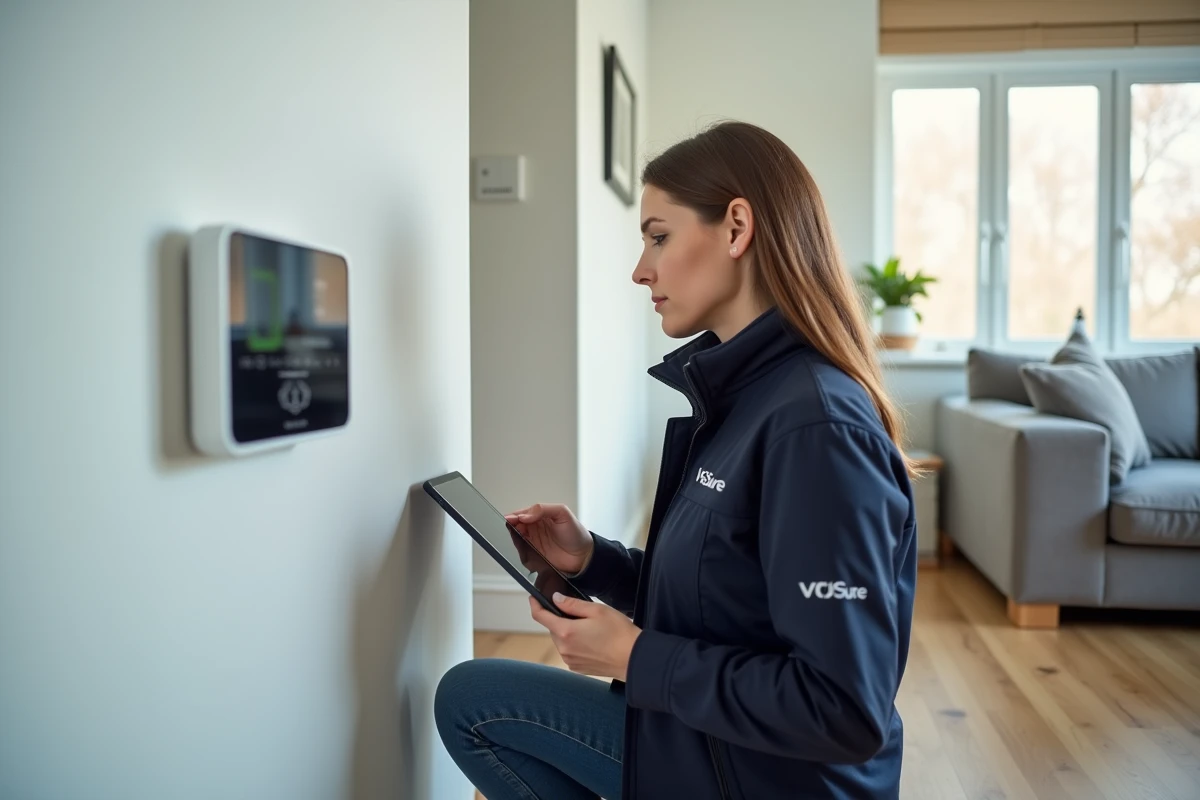
The very first physical contact with Verisure is through the security expert who visits to assess the home and install the equipment. This technician conducts a diagnosis of vulnerable access points (entrances, large windows, garage) and positions the detectors, central unit, and cameras based on the layout of the premises.
The installation is completed in a single visit, usually within a few hours. The technician configures the system, associates the badges and remote controls, and checks the communication between each sensor and the monitoring center.
One point to keep in mind: the quality of the detector placement directly affects the effectiveness of future doubt verifications. A poorly oriented detector in a hallway, a photo sensor blocked by furniture, and the operator’s ability to analyze an alert are compromised. If the positioning proposed by the technician does not suit you, now is the time to discuss it.
The installation visit remains the only planned visit from a Verisure agent to your home. Subsequent interventions, whether for maintenance or response to an alert, depend on the use of the system and the events detected by the monitoring service.